
ODOC Release Paths for Haskell
An Oklahoma prison release is not the same event as leaving the Haskell County Criminal Justice Center. A person sentenced in a Haskell County case may remain in the county jail while waiting for state reception. ODOC calls a sentenced person in that posture “ODOC-ready.” The later departure from the county building is usually a transfer into state custody, not a community release.
Once in the state system, a person may discharge a sentence, enter parole, move to supervised community placement, or transfer among ODOC locations. Parole means conditional release from prison while the balance remains under supervision. Probation commonly follows a suspended court sentence and may occur without a prison stay. Community corrections can place someone outside a secure prison while legal ODOC custody continues. “Outside” must therefore be read with the sentence and status fields.
No ODOC prison was identified inside Haskell County. The `doc.html` route represents the statewide system serving Haskell cases, not a local prison that does not exist. Facility assignments can change, and the public offender lookup should identify the actual placement. The local Stigler Probation and Parole office is a community-supervision office, not a detention site.
Search ODOC Haskell Release Records
The ODOC Offender Info gateway leads to the public Oklahoma offender lookup. Search by Oklahoma DOC number when possible because it is more precise than a name. When the number is unknown, combine the correctly spelled first and last name with date of birth. Validate a match through the photograph and image date, physical description, reception history, Haskell County court, case number, and DOC number.
- Open the official ODOC gateway and follow its offender-search link. Read the current data notice before searching.
- Enter the DOC number. If unavailable, use first name, last name, and date of birth.
- Open the likely match and compare stable identifiers, the photo, physical details, court, and case.
- Read status and current-facility wording, then inspect every case and sentence row.
- Look for `Discharged Date` on each relevant sentence. Request records if active and discharged rows conflict.
The live lookup warns that it moved to a new data source and that ODOC is addressing unanticipated issues. The official ODOC lookup screen places that warning beside the search.
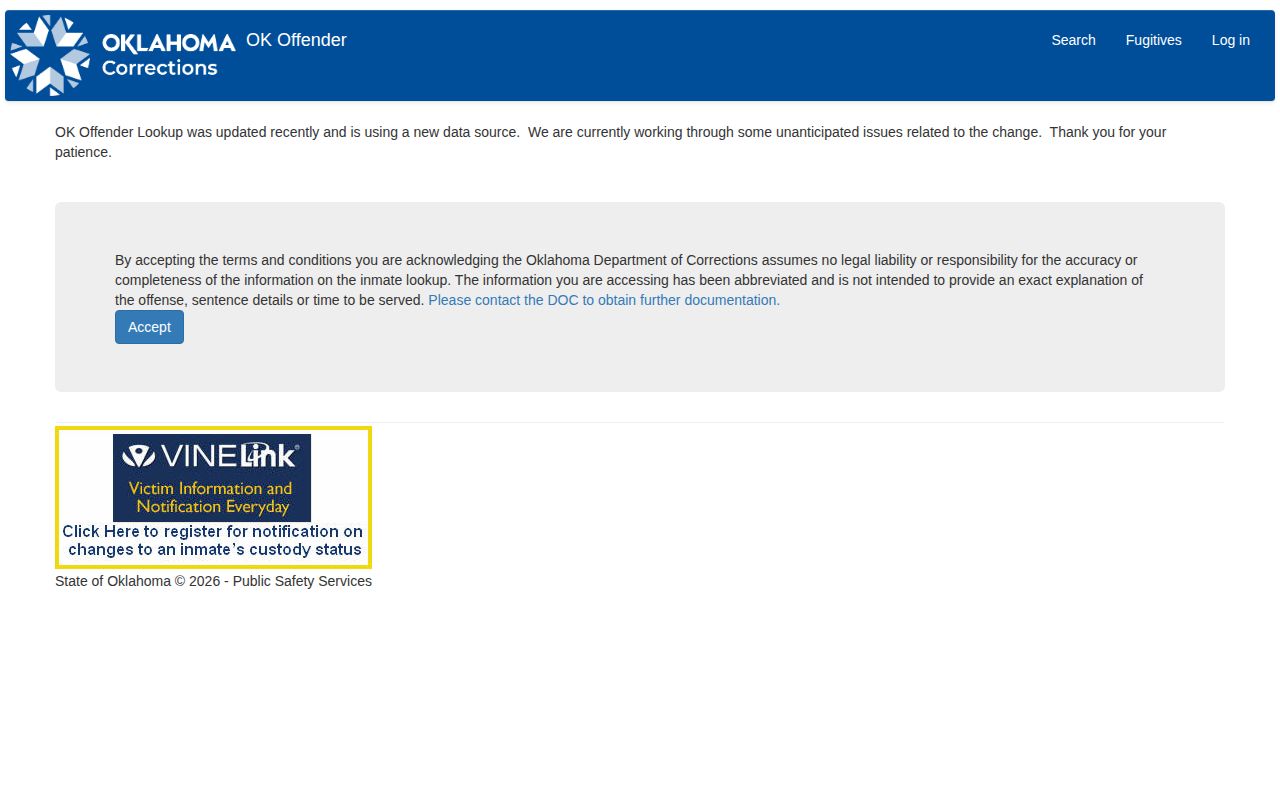
The screen is a useful first-party lead, but an abbreviated or inconsistent result needs documentation. A Haskell County name match should never be accepted without identity checks.
Read ODOC Haskell Discharge Fields
A known released-profile example establishes how the public record behaves without supplying facts about any featured person. It can display a photo; DOC number and date of birth; sex, race, height, weight, hair, and eyes; reception date; status; current facility; court and case; offense; conviction date; term; start and reception dates; and a sentence-specific discharged date. Each field has a limited role.
| ODOC field | How to interpret it |
|---|---|
| `INACTIVE` | Strong evidence that the displayed ODOC status is no longer active, subject to the record warning and identity match. |
| `OUTSIDE` | Outside the displayed facility context; it does not prove freedom from every form of custody or supervision. |
| `Discharged Date` | The recorded discharge of that sentence row, not automatically all rows on the profile. |
| Reception or start date | A custody or sentence-administration starting point, not a release date. |
| Court and case | A way to connect the state record to the Haskell County judgment and avoid namesake errors. |
The strongest public combination is an identity-validated record marked inactive and outside with a discharged date on every relevant sentence. If one row is discharged while another remains active, the person may not have completed all ODOC obligations. An `OUTSIDE` label alone can also coexist with parole or community placement. Use precise wording such as “released from secure state custody to parole” or “the listed ODOC sentence is discharged.”
Note: Read all sentence rows; one completed Haskell County sentence does not clear a second active Oklahoma sentence.
ODOC Release Dates Need Context
Oklahoma uses several dates that should not be collapsed. A `Discharged Date` records a completed sentence event. A parole eligibility date, often labeled `PE DATE` in a Pardon and Parole Board result, marks when parole consideration can occur. `PRD` in those public result sheets means projected release date. A board action records a decision or procedural outcome. None of the last three alone proves a physical exit.
ODOC’s offender information FAQ says an individual tentative release date is ordinarily confidential unless the requester has a recognized legitimate need. ODOC gives the incarcerated person days remaining each month and says the person may calculate the date or ask a records officer or case manager. The working date can change with earned-credit level, misconduct, and achievement credits.
The official ODOC FAQ shown below provides the agency’s release-date explanation and contacts.
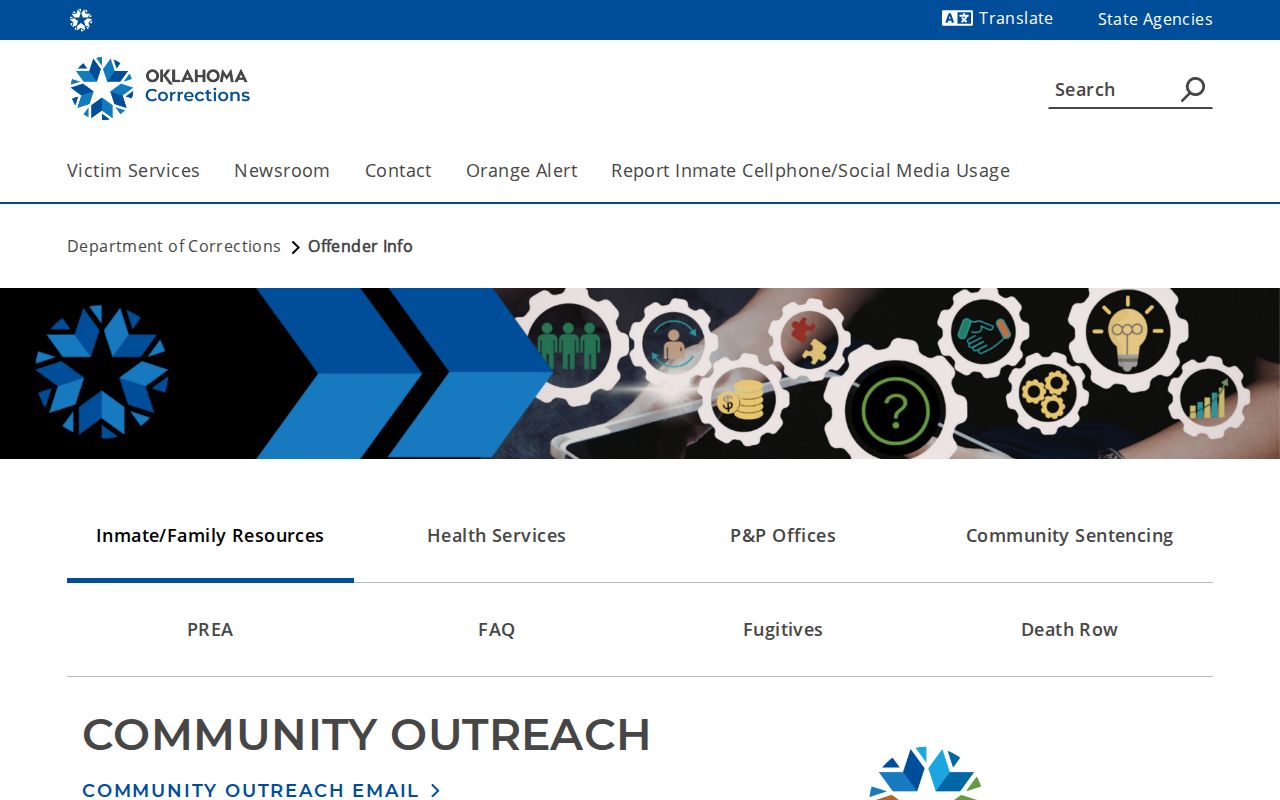
That official limitation is why a future date should be called tentative or projected. For the actual event, seek a later discharged date, a VINE custody-change event, supervision status, or facility and records confirmation. The Haskell County projected-release route gives the fuller distinction between parole eligibility, projected dates, earned credits, and actual discharge.
Request ODOC Haskell Discharge Proof
Use ODOC Legal Services when the public result is incomplete, conflicting, or not enough for a defined records need. Give the full name, date of birth, DOC number, Haskell County court and case, and a narrow date range. Ask for the existing offender status or discharge documentation. The focused discharge address is osordischarges@doc.ok.gov. Closed Records is listed at 405-425-2691, while the General Counsel contact is 405-425-2515.
Oklahoma Department of Corrections Legal ServicesStatewide Oklahoma records office
General Counsel: 405-425-2515
Closed Records: 405-425-2691
Discharges: osordischarges@doc.ok.gov
Request portal: official Legal Services page
No reliable public fee or turnaround was found. Ask about inspection, format, delivery, and estimated charges before authorizing copies. ODOC also publishes an authorization form for incarceration and supervision records that may otherwise be restricted. That form does not turn closed records into open records; it supplies a separate authorized path when legally appropriate.
The official ODOC request page shown below is the source for current records routing.
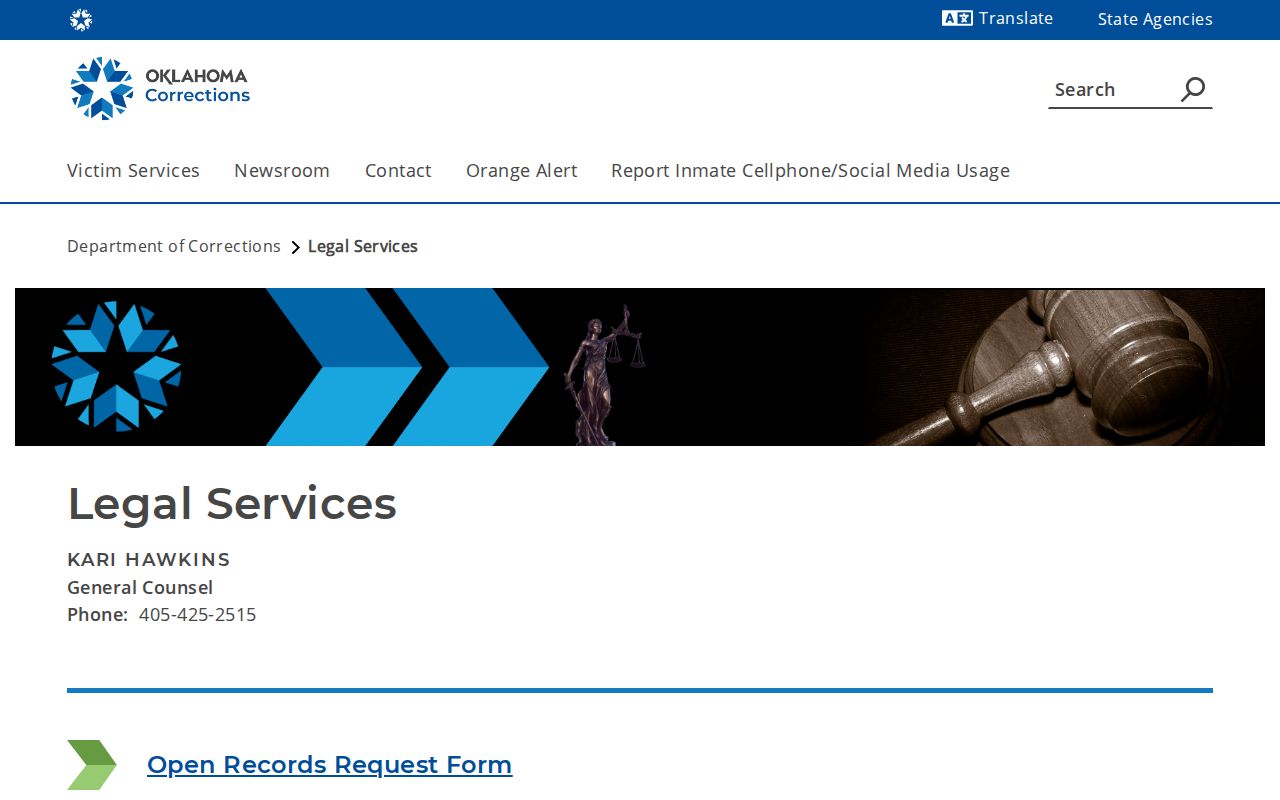
That agency route connects a public search result to a documentation fallback rather than leaving an uncertain status unresolved.
Haskell Releases Under ODOC Supervision
A person can be physically in the community yet remain under state supervision. The current ODOC directory lists Stigler Probation and Parole at 105 SE 3rd Street, Unit C, Stigler, OK 74462, 918-318-9653. Use that office for local routing after an ODOC record or court sentence identifies probation or parole. Privacy and identity rules may restrict person-specific information.
- Parole
- Conditional prison release while the person serves the remaining balance under supervision.
- Probation
- Court-ordered community supervision, often tied to a suspended sentence and not necessarily preceded by prison.
- Discharge
- Recorded completion of the applicable sentence or supervision obligation.
- Community corrections
- An ODOC placement that may be outside secure prison while state custody continues.
The Oklahoma Pardon and Parole Board decides or recommends parole; ODOC administers custody and community supervision. A favorable board result is not a gate-exit record. Check the later ODOC status, the facility, and the supervising office. If the offender-information channel shows a fugitive or absconder issue, that indicates an unresolved ODOC obligation and must not be turned into a claim about a new case.
Haskell State Release Evidence Chain
For a Haskell case, the sequence may begin with a county judgment and a period in the county jail, continue through ODOC reception and placement, and end with parole or discharge. Each handoff has its own record. The sheriff documents leaving local custody. ODOC documents state reception, status, placement, sentence rows, and discharge. The Board documents parole consideration. The Stigler office addresses local supervision routing.
| Question | Correct source |
|---|---|
| Did the person leave the Haskell jail? | Sheriff jail-register entry and recorded destination |
| Was the departure a state transfer? | Sheriff destination plus ODOC reception/status |
| Has a state sentence ended? | Every applicable ODOC `Discharged Date` row or records response |
| Is the person on parole or probation? | ODOC status, court sentence, and Stigler supervision routing |
| Did the person enter the community? | Later custody, supervision, and discharge evidence, not roster disappearance |
This chain avoids two common errors. A county-to-ODOC transfer is not a local community release, and a parole placement is not full sentence discharge. Preserve the DOC number, source URL, access date, and exact field language whenever the distinction matters.
Note: The sheriff proves the county handoff, while ODOC proves the later state status and each sentence-level discharge.